
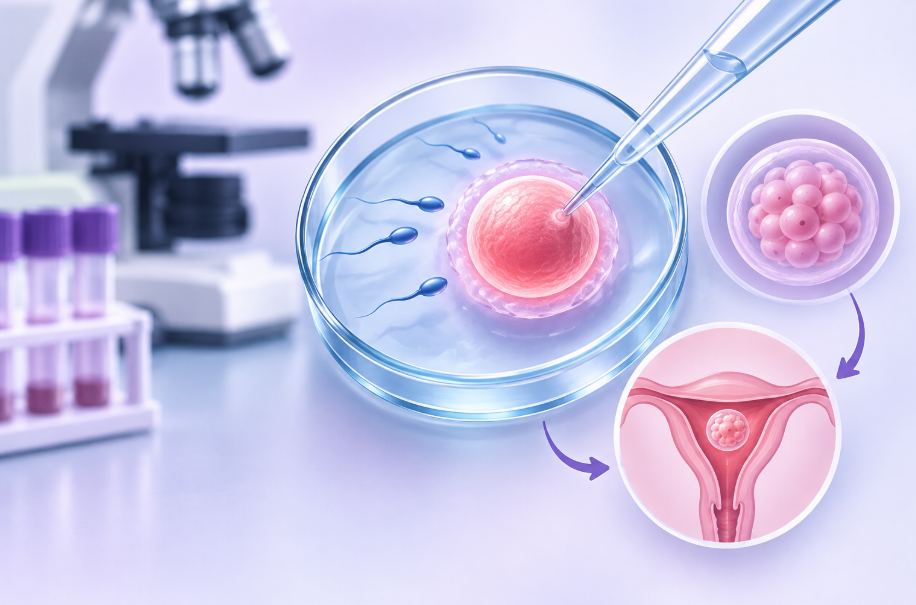
IVF Treatment in Kathmandu, Nepal
Understand Your Fertility Options with Hope Fertility & Diagnostic Center
Starting or growing a family is an important part of life, but difficulties conceiving can bring uncertainty and emotional stress. If you have been trying to conceive without success, understanding your fertility health and available treatment options can help you make informed decisions.
At Hope Fertility & Diagnostic Center, we recognize that every fertility journey is different. Our approach to fertility care in Kathmandu, Nepal, focuses on understanding individual reproductive health concerns, explaining appropriate investigations, and helping patients explore suitable treatment options.
In vitro fertilization (IVF) is an established form of assisted reproductive technology that may help people achieve pregnancy when natural conception is difficult or certain fertility treatments have not been successful.
This guide explains IVF treatment in Kathmandu, including how the procedure works, who may benefit, the tests involved, possible costs, success factors, and important considerations before starting treatment.
What Is IVF Treatment?
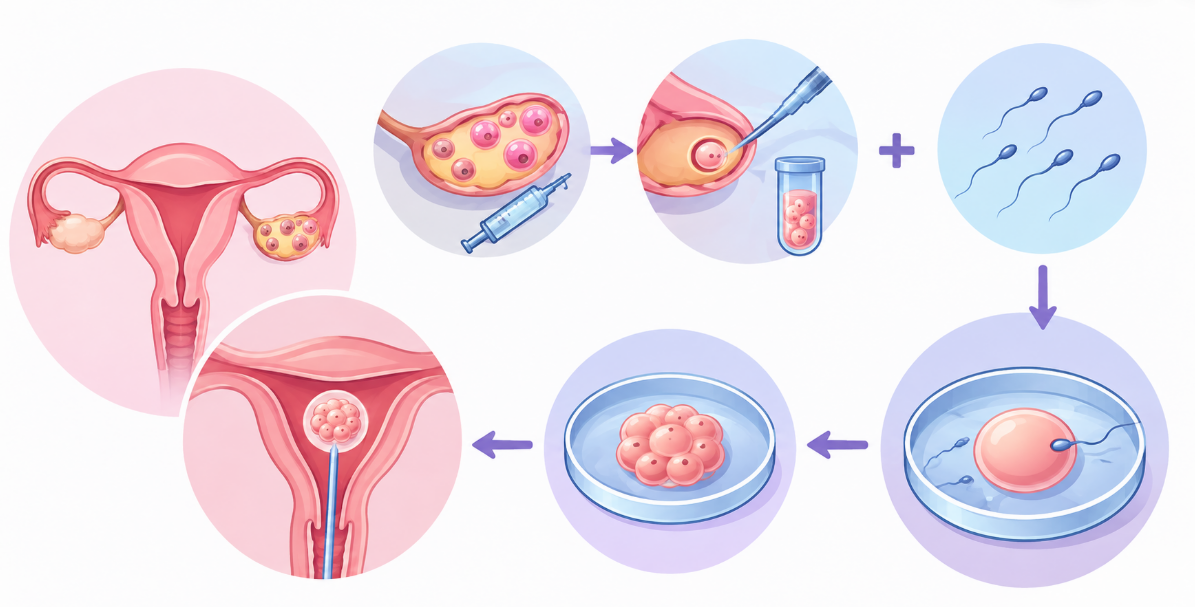
In vitro fertilization (IVF) is a fertility treatment in which eggs are collected from the ovaries and fertilized with sperm in a specialized laboratory. When fertilization occurs, the resulting embryo is monitored during its early development. A suitable embryo may then be transferred into the uterus with the aim of establishing a pregnancy.
IVF is one of the best-known forms of assisted reproductive technology (ART). Unlike natural conception, where fertilization generally occurs inside a fallopian tube, IVF allows fertilization to take place outside the body under controlled laboratory conditions.
An IVF cycle commonly involves ovarian stimulation, ultrasound monitoring, egg retrieval, sperm preparation, fertilization, embryo culture, and embryo transfer. Additional procedures, such as intracytoplasmic sperm injection (ICSI) or embryo freezing, may be considered depending on individual circumstances.
IVF does not guarantee pregnancy. Its suitability and chances of success depend on several factors, including age, reproductive health, the cause of infertility, and the quality of available eggs, sperm, and embryos.
For more information about infertility and available treatment approaches, visit the World Health Organization's infertility resource.
Who May Benefit from IVF Treatment?
IVF treatment may be recommended when a fertility assessment identifies conditions that make natural conception difficult or when other appropriate treatments have not achieved pregnancy.
1. Blocked or Damaged Fallopian Tubes
The fallopian tubes normally allow eggs and sperm to meet. When one or both tubes are significantly damaged or blocked, fertilization may be difficult.
IVF bypasses the fallopian tubes by allowing eggs and sperm to be brought together in a laboratory.
2. Male Factor Infertility
Low sperm count, reduced sperm motility, abnormal sperm morphology, or other sperm-related conditions can affect fertility.
Depending on the diagnosis, IVF with ICSI may be considered. ICSI involves injecting a single sperm directly into a mature egg.
Learn more about male infertility evaluation and treatment.
3. Ovulation Disorders
Irregular or absent ovulation can reduce the chances of conception. Conditions such as polycystic ovary syndrome (PCOS) may contribute to ovulation difficulties.
Some patients benefit from simpler treatments, such as ovulation induction, before IVF is considered.
Explore female infertility evaluation and treatment.
4. Endometriosis
Endometriosis occurs when tissue similar to the uterine lining grows outside the uterus. In some patients, it can affect reproductive organs and fertility.
IVF may be considered depending on the severity of the condition, age, previous treatment, and other fertility factors.
5. Unexplained Infertility
Sometimes, standard fertility investigations do not identify a clear reason for difficulty conceiving.
This is known as unexplained infertility. IVF may be an option in selected cases after considering the duration of infertility, age, previous treatment, and patient preferences.
6. Age-Related Fertility Challenges
Fertility generally declines with age, particularly as egg number and quality decrease.
IVF may be discussed as part of fertility planning, but it cannot reverse age-related changes in egg quality. A specialist assessment can help clarify realistic treatment options.
7. Previous Fertility Treatment Has Not Worked
Some patients consider IVF after unsuccessful ovulation induction or intrauterine insemination (IUI).
The decision to move to IVF should depend on the underlying diagnosis, treatment history, expected benefits, and individual circumstances.
When should you seek fertility advice?
Fertility evaluation is commonly recommended after 12 months of regular unprotected intercourse without pregnancy, or after approximately six months for women aged 35 or older. Earlier assessment may be appropriate when there are known reproductive conditions, irregular periods, previous pelvic surgery, or suspected male infertility.
IVF Treatment Process: Step by Step
Understanding the IVF process can help patients prepare for treatment and know what to expect at each stage.
Although protocols vary, a typical IVF cycle involves the following steps.
Step 1: Initial Fertility Consultation and Assessment
The process begins with a review of reproductive and medical history, previous pregnancies, menstrual patterns, fertility investigations, and any earlier treatments.
A fertility specialist may recommend tests to assess ovarian reserve, reproductive hormones, uterine health, and sperm quality.
The results help determine whether IVF is appropriate and what treatment approach may be suitable.
Step 2: Ovarian Stimulation
During a natural menstrual cycle, the ovaries usually release one mature egg.
In IVF, prescribed fertility medications are used to encourage several follicles to develop. The aim is to obtain an appropriate number of eggs for fertilization.
Medication type and dosage are individualized according to factors such as age, ovarian reserve, medical history, and expected ovarian response.
Step 3: Follicular Monitoring
Throughout ovarian stimulation, ultrasound examinations are performed to monitor the growth of ovarian follicles.
Blood hormone tests may also be used when clinically indicated.
Monitoring helps the medical team assess the response to medication, adjust treatment when necessary, and determine the appropriate timing for egg retrieval.
Learn more about follicular monitoring.
Step 4: Egg Retrieval
Once the follicles are ready, medication is given to support final egg maturation.
Egg retrieval is generally performed using ultrasound guidance. A fine needle is passed through the vaginal wall to collect fluid from the ovarian follicles.
The procedure is usually performed with sedation or anesthesia, according to the clinical setting and patient's needs.
Not every follicle contains a mature egg, and the number of eggs collected can vary.
Step 5: Sperm Collection and Preparation
A semen sample is usually collected and processed to identify sperm suitable for fertilization.
If sperm retrieval or previously frozen sperm is needed, additional planning may be required.
Semen quality and the underlying infertility diagnosis help determine the appropriate fertilization technique.
Read about semen analysis and sperm quality testing.
Step 6: Fertilization in the Laboratory
The collected eggs are assessed, and suitable mature eggs are fertilized using one of two main approaches:
Conventional IVF: Eggs are placed with prepared sperm in a laboratory environment, allowing sperm to fertilize the eggs.
ICSI: A single sperm is injected directly into a mature egg using specialized laboratory equipment.
ICSI may be considered in particular circumstances, including some cases of male factor infertility or previous fertilization difficulties.
Learn more about ICSI treatment.
Step 7: Embryo Development and Culture
After fertilization, the developing embryos are monitored in the laboratory.
Embryos may be cultured for several days. Some develop to the blastocyst stage, typically around day five or six.
Not every fertilized egg develops into an embryo suitable for transfer or freezing. Embryo development depends on multiple biological factors.
Step 8: Embryo Transfer
During embryo transfer, a selected embryo is placed into the uterus using a thin catheter.
The procedure is usually brief and often does not require anesthesia.
The timing of transfer depends on the treatment plan. In some cases, embryos are frozen for transfer in a later cycle.
The number of embryos transferred should be decided carefully because transferring multiple embryos increases the risk of multiple pregnancy.
Explore embryo transfer treatment.
Step 9: Pregnancy Testing and Follow-Up
After embryo transfer, patients are given instructions about medications, follow-up care, and the appropriate date for pregnancy testing.
A blood test measuring human chorionic gonadotropin (hCG) is commonly used to assess whether pregnancy has occurred.
If the result is positive, additional monitoring and ultrasound examinations may be recommended.
If pregnancy does not occur, the treatment team can review the cycle and discuss possible next steps.
How Long Does an IVF Cycle Take?
An IVF cycle commonly takes several weeks, but the exact timeline varies.
Preparation, investigations, ovarian stimulation, egg retrieval, embryo development, and transfer may require different schedules. Frozen embryo transfer can take place in a separate cycle.
Patients should request an individualized treatment timeline rather than assuming every IVF journey follows the same schedule.
What Tests Are Required Before IVF Treatment?
Fertility testing is an important part of deciding whether IVF is suitable and planning treatment.
Not every patient needs every test. Investigations should be selected according to medical history, symptoms, previous results, and clinical recommendations.
AMH Test and Ovarian Reserve Assessment
Anti-Müllerian hormone (AMH) is commonly measured to help assess ovarian reserve and predict how the ovaries may respond to stimulation.
AMH does not directly measure egg quality and cannot reliably predict an individual's chance of pregnancy on its own.
Learn more about the AMH test in Kathmandu.
Fertility Hormone Tests
Hormone investigations may include:
-
Follicle-stimulating hormone (FSH)
-
Luteinizing hormone (LH)
-
Estradiol
-
Progesterone
-
Thyroid-stimulating hormone (TSH)
-
Prolactin
These tests may help investigate ovulation, hormonal conditions, and reproductive health when clinically indicated.
Explore fertility hormone testing.
Transvaginal Ultrasound
A transvaginal ultrasound can help evaluate the ovaries, uterus, endometrial lining, and antral follicle count (AFC).
Ultrasound findings may contribute to treatment planning and medication decisions.
Semen Analysis
Semen analysis assesses sperm characteristics such as concentration, motility, and morphology.
Abnormal results may require further evaluation rather than automatically indicating that IVF or ICSI is necessary.
Additional Fertility Investigations
Depending on the patient's circumstances, additional assessments may include uterine cavity evaluation, infectious disease screening, tubal assessment, or other targeted investigations.
A fertility specialist should explain why each test is recommended and how the findings may affect treatment.
IVF Treatment Cost in Kathmandu, Nepal
One of the most common questions patients ask is: How much does IVF treatment cost in Nepal?
The total cost of IVF varies according to the treatment protocol, medications, laboratory procedures, required investigations, and whether additional services are needed.
Because patients may require different treatment plans, the final cost should be discussed after an appropriate fertility assessment.
What Can Affect IVF Treatment Costs?
Initial consultation and diagnostic tests: Fertility investigations may be charged separately from the treatment cycle.
Ovarian stimulation medications: Medication requirements vary depending on the prescribed protocol and ovarian response.
Egg retrieval and laboratory procedures: Charges may include monitoring, egg collection, fertilization, and embryo culture.
ICSI: If clinically indicated, ICSI may involve an additional laboratory charge.
Embryo freezing and storage: Cryopreservation and ongoing storage may be separate expenses.
Frozen embryo transfer: A later transfer cycle may have its own medication, monitoring, and procedural costs.
Additional procedures: Other clinically indicated investigations or interventions may affect the overall treatment cost.
Questions to Ask About an IVF Package
Before beginning treatment, ask for a written estimate explaining:
-
Which consultations and tests are included?
-
Are stimulation medications included?
-
Does the package include conventional IVF, ICSI, or both?
-
Are embryo freezing and storage charged separately?
-
What happens financially if the cycle is cancelled?
-
Is frozen embryo transfer included?
-
What follow-up services are covered?
For accurate IVF cost information, request a personalized estimate based on your clinical assessment and the services available through Hope Fertility & Diagnostic Center.
IVF Success Rates: What Affects the Chance of Pregnancy?
IVF has helped many people achieve pregnancy, but success is not guaranteed.
The chance of having a baby through IVF varies significantly between patients.
Age and Egg Quality
Age is an important factor affecting IVF outcomes.
As reproductive age increases, the number and quality of available eggs generally decline, which can influence fertilization, embryo development, and the chance of live birth.
Ovarian Reserve and Response
Ovarian reserve tests, such as AMH and antral follicle count, can help estimate the expected response to ovarian stimulation.
However, a higher AMH result does not automatically mean a higher chance of having a baby.
Sperm Quality
Sperm concentration, motility, morphology, and other relevant factors can affect fertilization and may influence the choice of laboratory technique.
Cause of Infertility
Tubal disease, endometriosis, ovulatory disorders, male factor infertility, and other conditions may affect treatment planning and outcomes.
Embryo Development
Embryo development and suitability for transfer are important parts of the IVF process.
Not all retrieved eggs fertilize, and not all fertilized eggs develop into embryos suitable for transfer.
General Health and Lifestyle
Smoking, certain medical conditions, and other health factors may influence reproductive health and pregnancy outcomes.
Patients may benefit from addressing modifiable health risks before treatment.
Understanding IVF Success Rate Statistics
When comparing IVF clinics, it is important to understand what a reported success rate measures.
A positive pregnancy test, a clinical pregnancy, and a live birth are different outcomes.
Statistics may also be reported per egg retrieval, per embryo transfer, or per treatment cycle started. These figures should not be compared as though they measure the same thing.
Ask your fertility specialist about realistic expectations for your age, diagnosis, and proposed treatment.
For independent information, see the Human Fertilisation and Embryology Authority's IVF guidance.
Risks and Possible Side Effects of IVF Treatment
IVF is an established fertility treatment, but it involves medical procedures and medications that carry potential risks.
Understanding these risks helps patients make informed decisions.
Ovarian Hyperstimulation Syndrome (OHSS)
OHSS is a possible complication of ovarian stimulation in which the ovaries respond excessively to fertility medications.
Symptoms can include abdominal bloating, discomfort, nausea, and, in more serious cases, significant fluid shifts and breathing difficulties.
Treatment protocols and monitoring can help reduce the risk.
Discomfort and Procedure-Related Complications
Fertility medications may cause temporary symptoms such as bloating, headaches, or discomfort.
Egg retrieval can cause temporary pelvic discomfort. Bleeding, infection, and injury to nearby structures are uncommon but recognized complications.
Multiple Pregnancy
Transferring more than one embryo can increase the chance of twins or higher-order multiple pregnancy.
Multiple pregnancies carry additional risks for both the pregnant patient and babies. Appropriate embryo transfer decisions are therefore important.
Ectopic Pregnancy and Miscarriage
An ectopic pregnancy occurs when a pregnancy develops outside the uterus.
Miscarriage can also occur after IVF, as it can after natural conception.
Emotional and Financial Stress
Fertility treatment can involve uncertainty, repeated appointments, physical demands, and significant financial commitments.
Emotional support, realistic expectations, and clear communication are important throughout the process.
Seek urgent medical assessment if you experience severe abdominal pain, breathing difficulty, fainting, heavy bleeding, or other concerning symptoms during or after fertility treatment.
Further reading: NHS guidance on IVF and possible complications.
IVF vs IUI vs ICSI: Understanding the Differences
IVF, IUI, and ICSI are related fertility treatments, but they are not interchangeable.
| Treatment | How it works | When it may be considered |
|---|---|---|
| IVF | Eggs are fertilized with sperm in a laboratory, and an embryo is transferred into the uterus. | Selected cases of tubal disease, infertility after other treatments, or other clinical indications. |
| IUI | Prepared sperm is placed directly into the uterus around ovulation. | Certain cases where simpler assisted conception may be appropriate. |
| ICSI | A single sperm is injected directly into a mature egg during an IVF cycle. | Selected sperm-related or fertilization difficulties. |
Is IVF Better Than IUI?
Neither treatment is automatically better for every patient.
IUI is generally less invasive and involves fewer laboratory steps, but it may be unsuitable for certain fertility conditions.
IVF is more complex and may be recommended when there is a stronger medical indication.
Read more about IUI treatment in Kathmandu.
Is ICSI More Successful Than Conventional IVF?
ICSI is particularly useful in certain situations involving sperm-related infertility or previous fertilization difficulties.
However, ICSI does not necessarily improve live-birth outcomes for every patient undergoing IVF.
The choice should be based on clinical findings rather than assuming that a more complex procedure always produces better results.
Explore ICSI treatment in Nepal.
Why Consider Hope Fertility & Diagnostic Center for Fertility Care in Kathmandu?
Choosing where to begin fertility treatment is an important decision. Patients deserve clear explanations, appropriate investigations, realistic expectations, and respectful communication.
At Hope Fertility & Diagnostic Center, our goal is to help patients better understand their reproductive health and the fertility care options relevant to their circumstances.
Individualized Fertility Assessment
Fertility concerns can arise from male factors, female factors, a combination of conditions, or unexplained causes.
A careful assessment helps identify relevant concerns and supports more informed treatment decisions.
Focus on Fertility Diagnostics
Diagnostic investigations play an important role in understanding reproductive health.
Hormone testing, ultrasound assessment, semen analysis, and other clinically appropriate investigations can provide useful information for fertility planning.
Clear Patient Education
Patients should understand why a treatment is being considered, what it involves, its possible benefits and risks, and the likely financial implications before giving informed consent.
Compassionate and Respectful Communication
Fertility difficulties can affect emotional well-being. We believe patients should be able to discuss sensitive concerns in a supportive environment and receive clear answers to their questions.
Convenient Access to Fertility Consultation in Kathmandu
For individuals and couples exploring fertility treatment in Kathmandu, arranging an initial consultation can be a practical first step toward understanding available options.
Contact Hope Fertility & Diagnostic Center to learn about available fertility consultations, diagnostic services, and the IVF treatment pathway.
Frequently Asked Questions About IVF Treatment in Kathmandu
1. What is IVF treatment?
IVF, or in vitro fertilization, is an assisted reproductive treatment in which eggs are fertilized with sperm in a laboratory. A suitable embryo may then be transferred into the uterus to attempt pregnancy.
2. How much does IVF treatment cost in Kathmandu?
IVF costs vary depending on medications, laboratory procedures, investigations, and additional services such as ICSI or embryo freezing. A written, individualized cost estimate is the most reliable way to understand the likely expense.
3. How long does IVF treatment take?
An IVF cycle often takes several weeks. The duration depends on the treatment protocol, ovarian response, investigations, and whether a fresh or frozen embryo transfer is planned.
4. Is IVF treatment painful?
IVF involves injections, ultrasound examinations, and egg retrieval. Some discomfort may occur. Egg retrieval is generally performed with sedation or anesthesia, while embryo transfer is often completed without anesthesia.
5. What is the best age for IVF treatment?
IVF outcomes are strongly influenced by age, particularly egg age and quality. Younger patients generally have higher success rates using their own eggs, but individual circumstances vary. A specialist can explain age-related expectations.
6. Can IVF help with male infertility?
Yes. IVF may be considered for certain forms of male infertility. In some cases, ICSI is used to assist fertilization. The most appropriate approach depends on semen analysis and other relevant findings.
7. Is IVF successful on the first attempt?
Some patients achieve pregnancy during their first IVF cycle, while others may require additional treatment or may not achieve pregnancy. Outcomes depend on age, diagnosis, embryo development, and other factors.
8. What is the difference between IVF and ICSI?
Conventional IVF allows prepared sperm and eggs to interact in the laboratory. ICSI involves injecting a single sperm into a mature egg. ICSI is a fertilization technique used within an IVF treatment cycle.
9. Can IVF be performed with blocked fallopian tubes?
IVF may be an option for patients with blocked or damaged fallopian tubes because fertilization occurs outside the body. However, some tubal conditions, such as hydrosalpinx, may require additional assessment or treatment.
10. What should I do before starting IVF?
Begin with a fertility consultation and follow the recommended investigations. Discuss medications, medical conditions, lifestyle factors, treatment expectations, risks, costs, and any questions about the process.
Book an IVF Consultation in Kathmandu, Nepal
Every fertility journey begins with understanding your individual circumstances.
Whether you are experiencing difficulty conceiving, exploring IVF treatment in Nepal, or seeking clarity about fertility tests and assisted reproductive options, an appropriate consultation can help you understand the next steps.
At Hope Fertility & Diagnostic Center, we believe fertility decisions should be supported by reliable information, individualized assessment, and compassionate communication.
Take the next step toward understanding your fertility options.
Contact Hope Fertility & Diagnostic Center
Important medical information: This page provides general education and does not replace an individualized consultation with a qualified healthcare professional. Treatment suitability, risks, availability, and expected outcomes must be discussed with the responsible clinical team.
We deliver gentle support every day
Sed ut perspiciatis unde omnis iste natus error sit voluptatem accusantium doloremque laudantium, totam rem aperiam, eaque ipsa quae ab illo inventore veritatis et quasi architecto beatae vitae dicta sunt explicabo. Nemo enim ipsam voluptatem quia voluptas sit aspernatur aut odit aut fugit, sed quia consequuntur magni dolores eos qui ratione voluptatem sequi nesciunt. Neque porro quisquam est, qui dolorem ipsum quia.
But I must explain to you how all this mistaken idea of denouncing pleasure and praising pain was born and I will give you a complete account of the system, and expound the actual teachings of the great explorer of the truth, the master-builder of human happiness. No one rejects, dislikes, or avoids pleasure itself, because it is pleasure, but because those who do not know how to pursue pleasure rationally encounter consequences that are extremely painful.


Our offer assistance with activities such as:
Resident-First Philosophy
The process begins when a customer or client requests a service. This could be an inquiry, a complaint or a need for assistance. It's important to capture detailed information about.
24/7 Skilled Nursing Support
The process begins when a customer or client requests a service. This could be an inquiry, a complaint or a need for assistance. It's important to capture detailed information about.
Personalized Care Plans
The process begins when a customer or client requests a service. This could be an inquiry, a complaint or a need for assistance. It's important to capture detailed information about.
Safe, Homelike Environment
The process begins when a customer or client requests a service. This could be an inquiry, a complaint or a need for assistance. It's important to capture detailed information about.
Frequently Asked Questions
If you have been trying to conceive without success, a consultation can help identify next steps.